

100
K+
Platform users served by the locator ecosystem
5
Locator platforms connected via Location Hub
92
%
Design system adoption rate across eng teams
12
Service categories — adopted platform- wide
First-ever UX initiative at Pool Corp
Founded the UX team — zero prior design function
Enterprise SaaS
Design System
Figma
Webflow
Material UI

Overview
Two sides of
one ecosystem
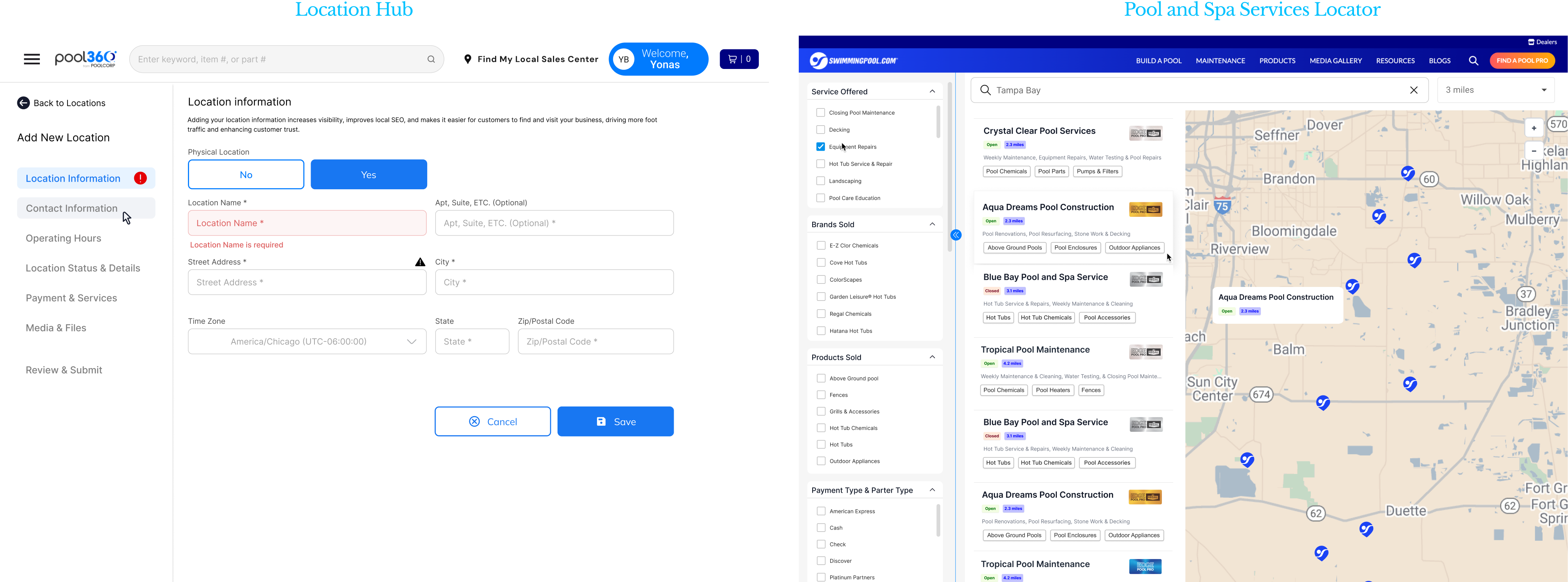
The Pool Service Locator wasn't a single product it was a two- sided platform. On one side: pool owners discovering local service professionals. On the other: dealers managing their public profile for the first time in Pool Corp's history.
🗺️
Service Locator
🏪
Dealer Profile
⚙️
Location Hub
B2B dashboard for dealers to manage listings, control platform visibility, and update their profile.
Consumer Side

Search by zip, city, or geo
Filter by service type (12 categories)
Toggle map / list view
Call or contact dealer directly
⇄
Dealer Side — Location Hub
Manage location data and hours
Control visibility per platform
View search and call analytics
Manage multiple locations
The Problem
Pool Corp had
no way
to
connect customers with service
Despite serving over 100,000 platform users, there was no discovery layer. Customers had no way to find certified dealers and dealers had no way to manage how they appeared on Pool Corp's platforms.
01
No customer-facing discovery tool
Pool owners had no way to find local certified service providers through Pool Corp's platform. No locator, no search, no map — they had to go elsewhere.
02
Dealers had zero visibility control
No dashboard, no way to update profiles, no control over whether they appeared on Pool Corp's 5 locator platforms. Data was managed manually by internal teams.
03
No single source of truth for dealer data
Hours, services, photos, and contact info were inconsistent across platforms
because no system existedto own and sync that data.
04
A true 0→1 initiative
No existing design team, no prior UX work, no design system to build on.
Designed from scratch as Pool Corp's first-ever UX initiative.
Process
How I approached a
two-sided
design
problem
With two distinct user types pool owners and pool dealers I ran parallel discovery tracks before converging on a shared architecture.
🔍
8
Dealer interviews across sales and service segments
🗺️
3
Competitive locators analyzed (Yelp, Angi, HomeAdvisor)
🧩
5
Platforms connected via Location Hub
🏗️
50+
Component design system built in parallel
01
Discovery and Competitive Analysis
Audited Yelp, Angi, HomeAdvisor, and Google Maps as locator benchmarks. Ran stakeholder interviews to define dealer needs. Mapped the two user journeys — find a dealer vs. be found.
02
Ecosystem Architecture
Mapped the full data model — how dealer profiles feed into the locator, how Location Hub syncs with 5 platforms, and what the toggle visibility hierarchy needed to look like.
03
Parallel Workstreams in Figma
Designed the consumer-facing locator and the B2B Location Hub simultaneously. Regular cross-stream syncs ensured data models stayed aligned between both surfaces.
04
UAB Review and Iteration
Presented to Pool Corp's User Advisory Board — real dealer stakeholders. Their feedback shaped the service taxonomy (12 categories) and the toggle hierarchy pattern.
05
Webflow Prototype and Handoff
Built a working Webflow prototype of the consumer-facing locator. Delivered Figma specs and a component library to the React engineering team for Location Hub.
Solution
Three surfaces.
One connected system.
Each surface was designed independently but shares a single data layer — dealer profiles flow from Location Hub into the locator and dealer profile pages in real time.

Surface 01 — Consumer
Service Locator
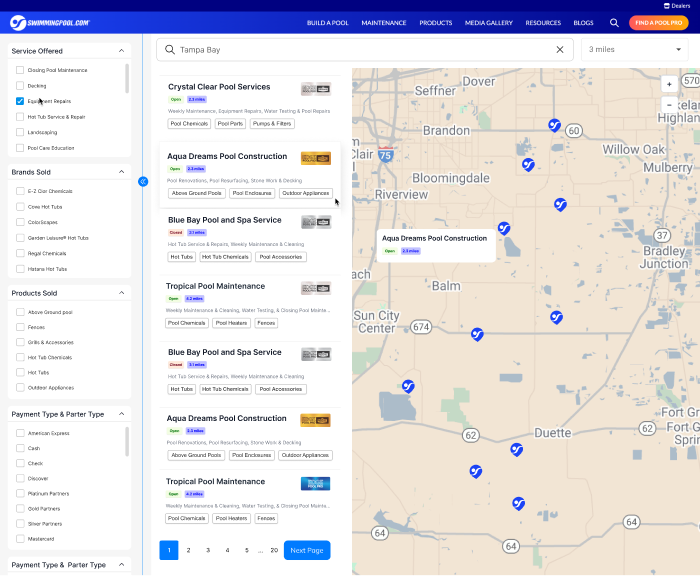
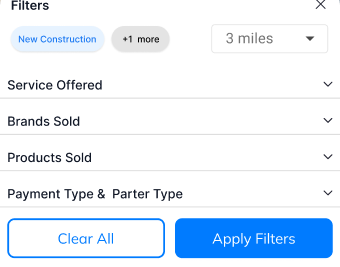
A split map + list view that lets pool owners search by location, filter by service category, and find verified dealers in their area. Navigation patterns borrowed from Yelp and Google Maps so users onboard instantly.
12 service category filters with custom taxonomy
Mobile-first responsive layout
Surface 02 — Consumer
Dealer Profile Page
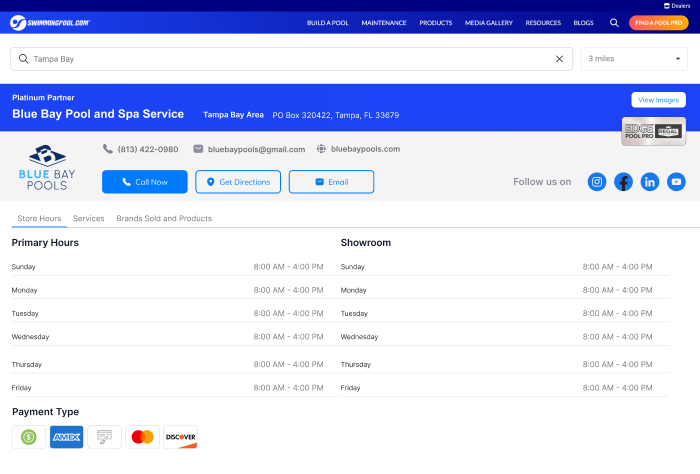
A full public-facing profile for each dealer. Designed around the information hierarchy pool owners care about: photos first, then services, then reviews, then contact.
Photo gallery with 5-slot grid — dealer-uploaded via Location Hub
CTA contact block with call, email, and directions
Surface 03 — B2B Dealer Tool
Location Hub Dashboard
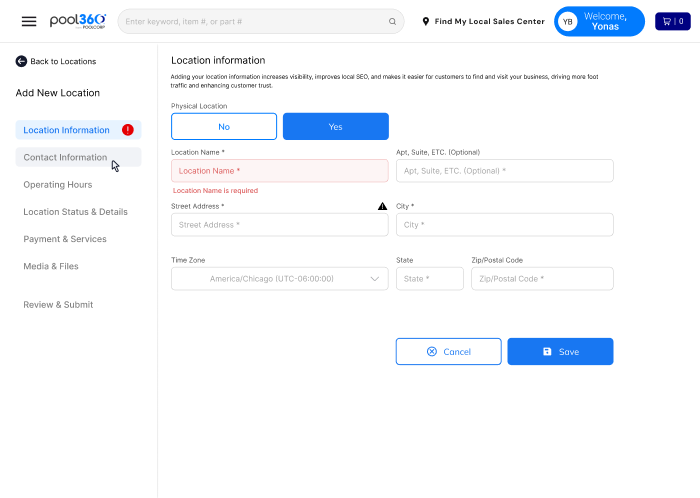
The dealer-facing management layer a first for Pool Corp. Dealers can update their profile, upload photos, set operating hours, and control visibility across all 5 Pool Corp platforms through a master/child toggle system.
Master toggle + per-platform visibility controls
Analytics: views, search appearances, call clicks
Multi-location management from one account
Built on Material UI — patterns adopted into 50+ component system
Mobile Experience
Locator, reimagined for the field

Search and Filter
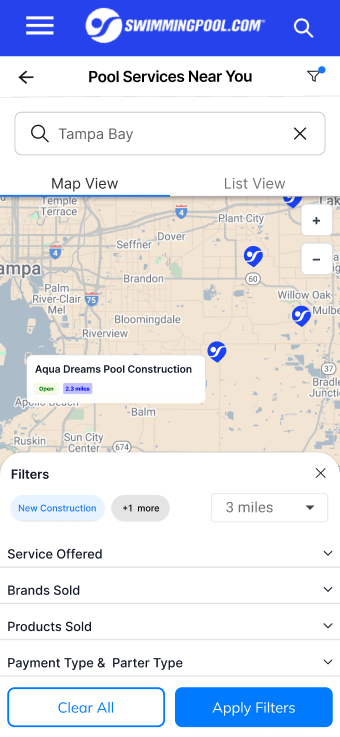
Dealer Profile

Map Toggle
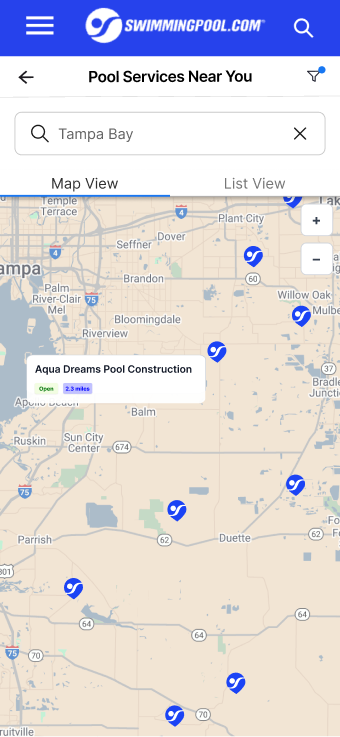
Visibility Settings — Master + Child Toggles
Design Decision
The toggle hierarchy
A key UAB insight: dealers needed to control visibility across 5 different Pool Corp platforms — but not always individually. I designed a master toggle that locks child toggles when off, preventing conflicting visibility states.
This pattern was later adopted into Pool360 and reused in Pool Pay and EDGE Home — becoming one of the most reused design patterns I built.
Outcomes
Results that outlasted
the project
The locator launched as Pool Corp's first consumer-facing discovery product — and the design patterns built here became the foundation for everything after.
🗺️
First dealer discovery tool in Pool Corp history
Pool owners could, for the first time, find certified dealers through Pool Corp's platform — keeping them within the ecosystem instead of searching externally.
⚙️
Location Hub = single source of truth
Dealer data — hours, services, photos, contact — now synced across all 5 Pool Corp locator platforms from one place. Eliminated the manual update process entirely.
🧩
Design patterns reused across 3 products
The toggle hierarchy, service taxonomy, and component patterns were adopted into Pool Pay, Pool Stepper, and EDGE Home — extending impact well beyond original scope.
📐
Service taxonomy standardized platform-wide
The 12-category service taxonomy I defined became the standard classification system across all subsequent customer-facing tools at Pool Corp.
Broader Impact
"Design doesn't always get the credit — but it was the foundation every other team built on top of."
— Yonas Berisa, Senior Product Designer
Reflections
What I learned designing
from zero
Building the first UX function at an established company is a different challenge than joining a mature design org.
01
Two-sided platforms need two discovery tracks
You can't design a locator without also designing for the people who need to be found. Running parallel discovery, converging them was the key architectural move.
02
Stakeholder buy-in shapes design systems
The UAB sessions weren't just validation — they actively shaped the taxonomy and toggle patterns. Getting real dealer voices into the room early changed the design in ways solo research couldn't.
03
0→1 products leave organizational residue
When you're first, your patterns become the default. The component library and toggle system I built became the assumed foundation for every product that followed.

